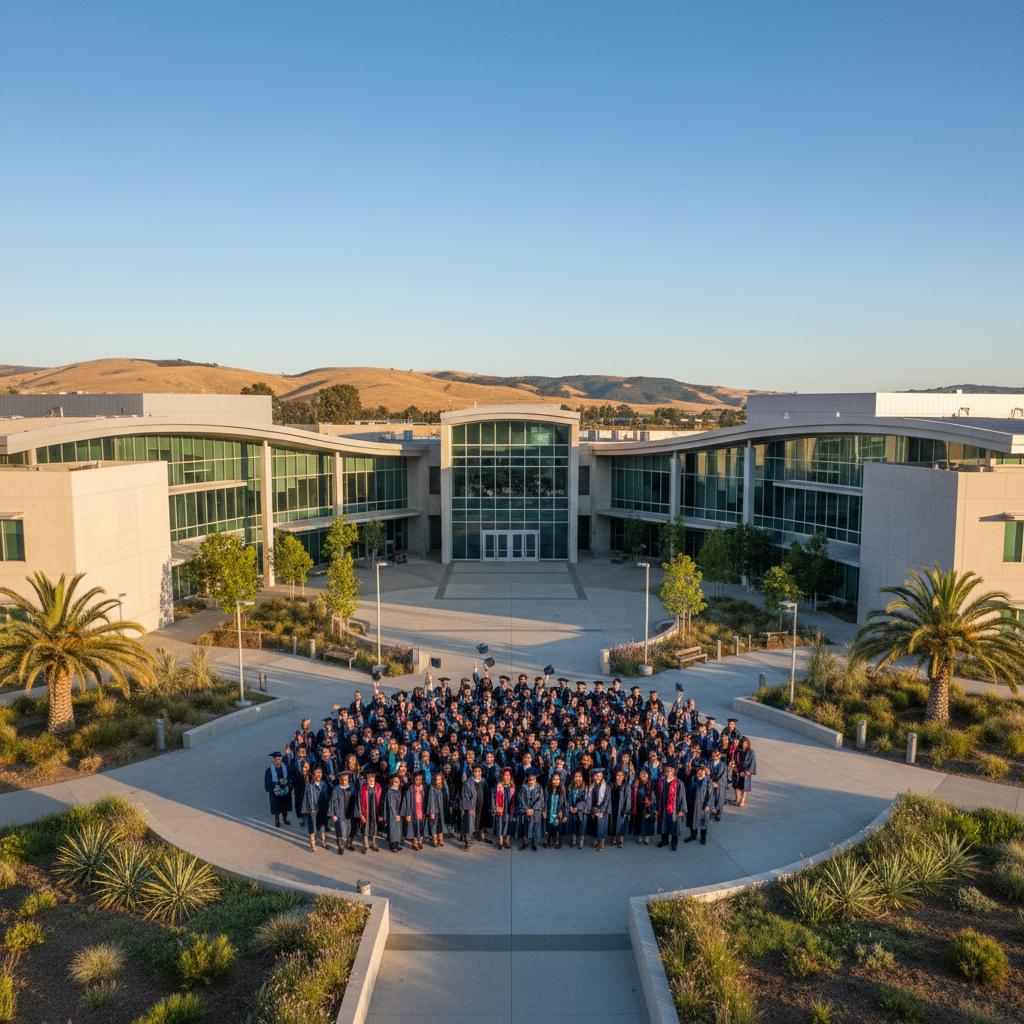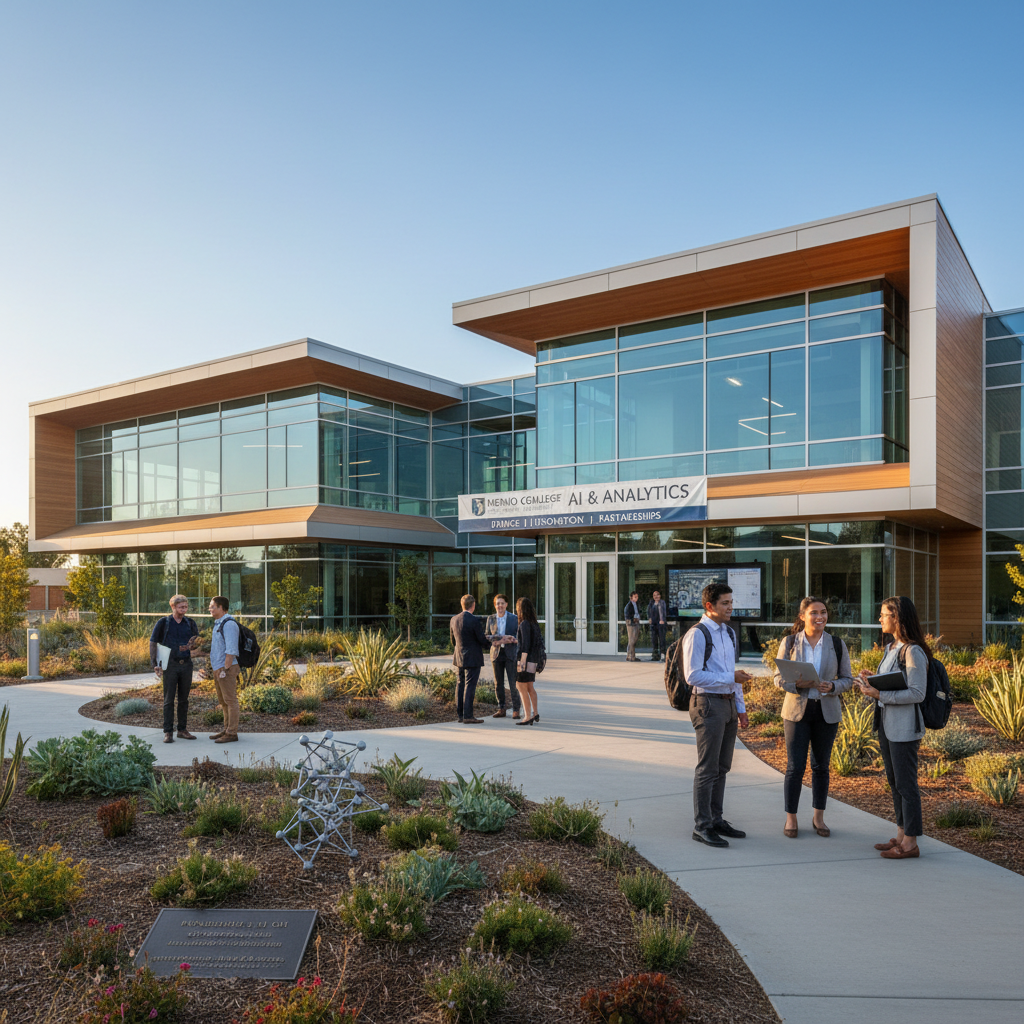
As artificial intelligence continues to reshape global industries, one Silicon Valley institution is expanding its efforts to prepare students for a transformed workforce. Menlo College in Atherton is enhancing its Artificial Intelligence & Analytics major, which combines technical training with business strategy, ethical reasoning, and hands-on learning.
The initiative aims to produce graduates who can navigate the complexities of an economy increasingly shaped by AI. The move comes as employers seek candidates who possess not only technical expertise but also the creativity and critical thinking skills that remain uniquely human.
The urgency for such programs is underscored by global economic trends. According to the World Economic Forum’s Future of Jobs Report, technological advancements, particularly in AI, are projected to revolutionize millions of jobs in the next decade, fuelling demand for a new generation of skilled workers.
California’s first AI and analytics degree
In the autumn of 2025, Menlo College made history by launching the first Bachelor of Science in Business with a major in Artificial Intelligence & Analytics in California. The program was designed to place students at the nexus of technology, business, and ethics.
“Higher education must anticipate the future rather than react to it,” said Mouwafac Sidaoui, Vice President for Academic Affairs and Dean of the School of Business. “Located in the heart of Silicon Valley, we have both a unique opportunity and a responsibility to equip future leaders with the technical knowledge, ethical foundation, and innovative mindset needed to thrive in an AI-driven world.”
The college’s location provides students with unparalleled access to the tech titans, entrepreneurs, and venture capitalists shaping the future of AI. This proximity allows for a curriculum that is not only academically rigorous but also deeply connected to the industry its students aspire to join.
The human skills AI cannot replace
While technical fluency is a core component of the program, the college places equal emphasis on fostering skills that machines cannot replicate. This philosophy was a central theme of the 2026 commencement address delivered by futurist and innovation strategist Christoph Burkhardt.
Burkhardt challenged the graduating class to look beyond the capabilities of technology and to cultivate their innate human curiosity. He argued that while AI can generate answers, the future belongs to those who can formulate profound questions.
His message reinforces a key tenet of Menlo College’s educational approach: as AI becomes more integrated into daily life, skills like creativity, ethical judgment, and human-centred leadership will become more valuable, not less.
From adversity to artificial intelligence
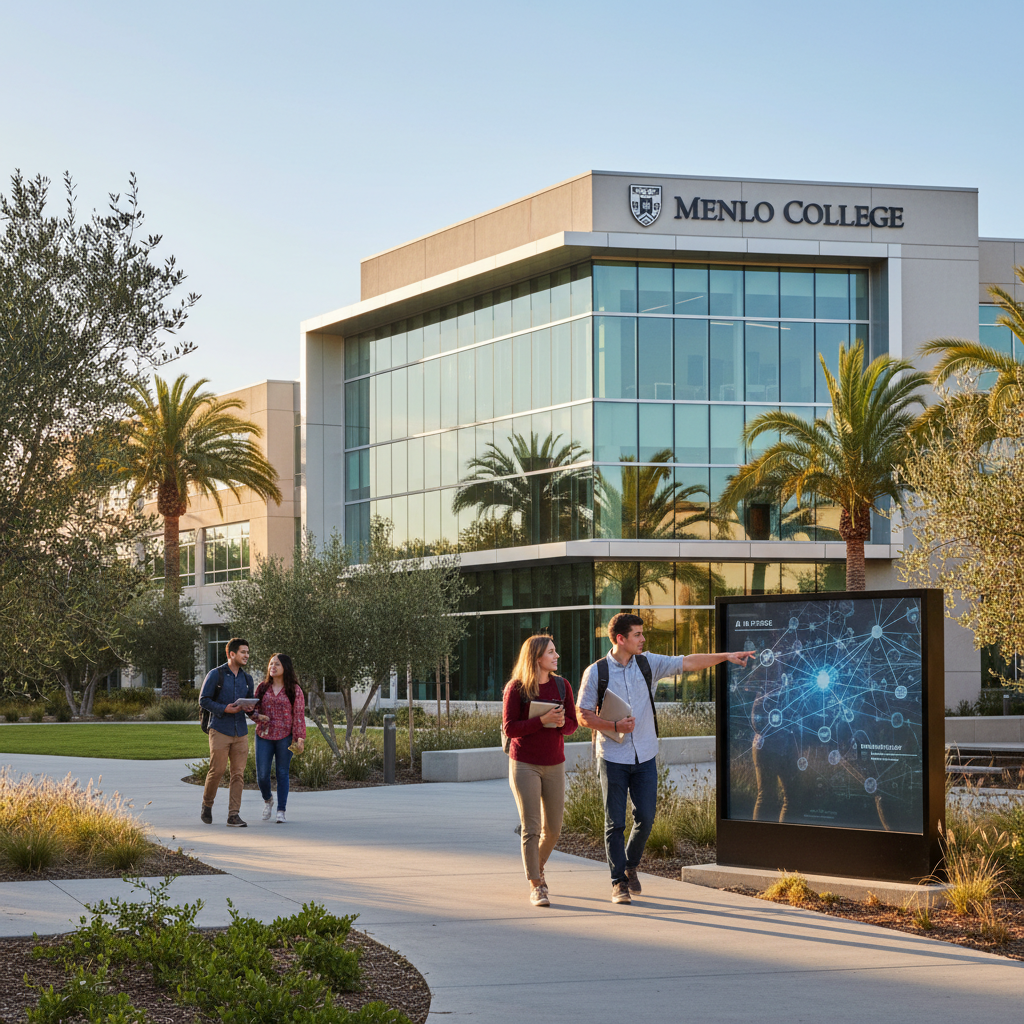
The AI & Analytics program has attracted a diverse and motivated student body, including those who have overcome significant personal challenges. Among them is Nargess Hassani, a member of the inaugural graduating class in May 2026.
Hassani arrived at Menlo College in 2022 after fleeing Afghanistan, where political turmoil had severely restricted educational opportunities for women. As she adjusted to a new country, she discovered a passion for technology and its potential to solve real-world problems. One of her recent projects involved creating an application to help job seekers by analyzing how well their resumes match specific job descriptions.
Through her work, which included independent projects in machine learning and computer vision, Hassani embraced the power of experiential learning. “One of the biggest lessons I learned is that the best way to learn new technologies is by building something real,” she said. Her journey of resilience was the subject of her TEDx Menlo College talk,_ We Are Not a Footnote: The Unsilenced Voice of the Afghan Girl_.
Innovation and entrepreneurship
The spirit of innovation is also embodied by students like Lachlan Ming, a member of the class of 2027. An international student and tennis player from Australia, Ming uses AI tools to manage his demanding schedule and to launch his own ventures. He founded GNG Engine, a platform designed to connect Australians studying at colleges and universities across the United States. The success of graduates entering the workforce is a key metric for many institutions, including other California universities. In similar discussions about market trends, the divide between EU and US collectors highlights differing approaches to grading and rarity.
Leading with ethics and responsibility
For many students, the program's focus on ethics is as crucial as its technical components. Luciana Rodriguez, a rising sophomore from San Jose, said the curriculum has taught her to view AI as a tool for problem-solving rather than a replacement for critical thinking.
Dr. Saheb, who helped develop the curriculum, said students examine the multifaceted challenges of AI, including algorithmic bias, data ethics, and responsible governance. This ensures graduates are prepared not just to build AI systems, but to consider their societal impact. This ethical grounding is vital in an era where AI is used in everything from school infrastructure management to public policy.
A ‘future-ready’ campus
To support its mission, Menlo College is rolling out new technological resources for the entire campus community. It recently launched a six-month pilot of AmplifyAI, a platform that provides faculty, staff, and students with secure access to more than 20 leading AI models. The platform was developed at Vanderbilt University.
The initiative is part of the college’s broader _Future Ready Now_ strategy, which integrates emerging technology, career preparation, and industry partnerships throughout the student experience. As the program continues to grow, its graduates are poised to enter a workforce where their unique blend of technical and humanistic skills is in high demand.
For students like Rodriguez, the goal is clear. “I want to help create a future where AI is not only transformative, but also ethical, safe, and human-centered,” she said.