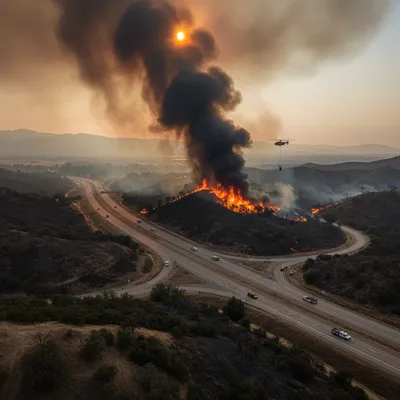
A new wildfire started late Saturday night in Los Angeles County, according to the National Interagency Fire Center. The fire, designated LAC-112515, was first reported at 11:13 p.m. on private land. The cause of the blaze is currently under investigation, and authorities have not yet released information on its size or containment status.
This new incident comes as fire crews across the state are already engaged with other blazes. In Kern County, the Sheep Springs Fire, which started on March 27, has burned 150 acres and is 40 per cent contained. Further north, the Sunny Fire in Napa County, which began on March 28, is now fully contained after burning 12 acres. The emergence of a new fire in Southern California highlights the year-round nature of wildfire risk in the state.
According to statistics from the California Department of Forestry and Fire Protection (CAL FIRE), there have been 374 wildfires so far in 2026, burning a total of 416 acres. To date, these fires have not resulted in any fatalities or destroyed structures. While these figures are a fraction of the totals from previous years, the appearance of new fires amid dry conditions is a cause for vigilance.
A dry and dangerous forecast
The backdrop to this new fire is a sober seasonal outlook for California. A developing La Niña pattern is expected to result in below-average precipitation and above-average temperatures through May 2026, creating prime conditions for wildfires. These weather patterns are exacerbating an already dry landscape.
As of early 2026, 37 per cent of California is experiencing drought conditions, with an additional 34 per cent of the state classified as abnormally dry. This lack of moisture leaves grasses, shrubs, and trees dangerously flammable, providing ready fuel for any new ignition, whether from natural causes like lightning or human activity.
CAL FIRE's seasonal outlook predicts varying risk levels across the state. For Northern California, forecasters anticipate "whiplash" weather patterns, with alternating cool, moist periods and warm, dry spells. The fire potential is projected to be normal. The forecast for Southern California, however, is significantly more concerning. The region is predicted to have an above-normal potential for large fires through the end of the year, driven by persistent warmth, minimal rainfall, and the potential for strong offshore winds.
Southern California on high alert
The elevated fire risk in Southern California is linked to a dangerous combination of record heat, low precipitation, and the infamous Santa Ana winds. These seasonal winds are extremely dry and can gust powerfully, fanning the flames of any new fire and spreading embers over long distances, potentially sparking new blazes far from the original fire front.

Los Angeles County is no stranger to the destructive power of wildfires. The 2025 fire season saw several major incidents in the county, including the Palisades, Eaton, and Hughes fires, which collectively burned tens of thousands of acres. This history means any new fire in the region receives an immediate and serious response from fire authorities.
The persistent threat of wildfire also complicates the state's housing challenges. Rebuilding homes and infrastructure after a major fire is a costly and lengthy process. In response, policymakers are exploring new avenues to expedite recovery, such as a state plan to insure the construction of factory-built housing, which could offer a faster way to rebuild communities.
Echoes of a devastating 2025 season
The concern over the new Los Angeles County fire is amplified by the memory of California's recent fire history. The 2025 fire season was a stark reminder of the state's vulnerability. That year, CAL FIRE responded to 8,036 separate wildfires that scorched a total of 205,817 acres across California.
The human and economic toll was immense. The 2025 fires were responsible for 31 deaths and the destruction of 16,627 structures, displacing families and levelling entire neighbourhoods. Some of the most destructive incidents included the Gifford Fire in Santa Barbara County, which burned over 131,000 acres, and the Madre Fire in San Luis Obispo, which consumed more than 80,000 acres.
This recent history of catastrophic loss informs the strategic response to every new fire. Firefighting agencies are acutely aware that even a small, seemingly remote fire can rapidly grow into a major disaster under the right weather conditions. Early and aggressive attacks are critical to containing fires before they threaten lives and property.
Preparing for the inevitable
As wildfires become an increasingly inevitable reality for many Californians, an emphasis has shifted towards community preparation and "home hardening." This approach focuses on taking proactive steps to make structures more resistant to ignition, particularly from wind-blown embers, which can travel a kilometre or more ahead of a fire.
Home hardening measures include using fire-resistant materials for roofing and siding, installing double-paned windows, and sealing any gaps where embers could enter a home. Another critical component is creating "defensíble space" by clearing flammable vegetation, dead trees, and dry leaves from the immediate vicinity of a structure. Residents can track active incidents and get safety information directly from the CAL FIRE website.
To aid homeowners, CAL FIRE and other organizations provide extensive resources, including a "Wildfire Home Retrofit Guide" and lists of low-cost retrofitting options that can significantly increase a home's chances of survival. These resources are part of a broader effort to foster a culture of preparedness, recognizing that preventing catastrophic loss is a shared responsibility, from government agencies to individual residents. While wildfires are a natural part of California's ecosystem, their interaction with human communities requires constant adaptation and vigilance, with an array of lifestyle resources available for those looking to learn more, such as at Charm and Gumption.
As fire crews monitor the new blaze in Los Angeles County, it serves as a timely warning. With a dry landscape and a weather forecast favouring fire, the 2026 season has the potential to become another challenging year for the Golden State, reinforcing the urgent need for preparedness at every level.