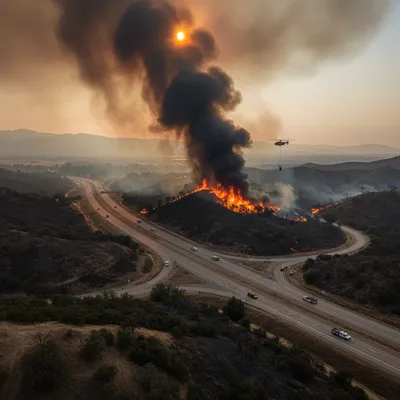
A foul, rotten-egg smell often blankets Steve Egger’s home in Southern California, a nightly reminder of the environmental crisis unfolding at his doorstep. The nearby Tijuana River, which should be a natural waterway, now foams with raw sewage from Mexico, releasing toxic gases before it spills into the Pacific Ocean.
Egger, 72, and his wife say they now suffer from frequent headaches, waking up congested and coughing. To combat the toxic air invading their home, they have installed a hospital-grade filtration system that constantly cycles the air. But it offers little relief. "Most nights we breathe in a horrible stench," Egger says. "It’s awful."
The Egger family is not alone. They are on the front lines of one of the nation’s most severe and protracted environmental disasters. According to the International Boundary and Water Commission, more than 100 billion gallons of untreated sewage, mixed with industrial chemicals and garbage, have flowed across the border through the river valley since 2018. Just since January of this year, an additional 10 billion gallons have made their way into California.
The crisis has rendered nearby beaches in San Diego County unusable for years, and has even caused illness among U.S. Navy SEALs who train in the contaminated coastal waters. The persistent flow of waste stems from a combination of factors, including an aging and overwhelmed wastewater infrastructure in Tijuana that has failed to keep pace with the city’s rapid population and industrial growth.
A community under siege
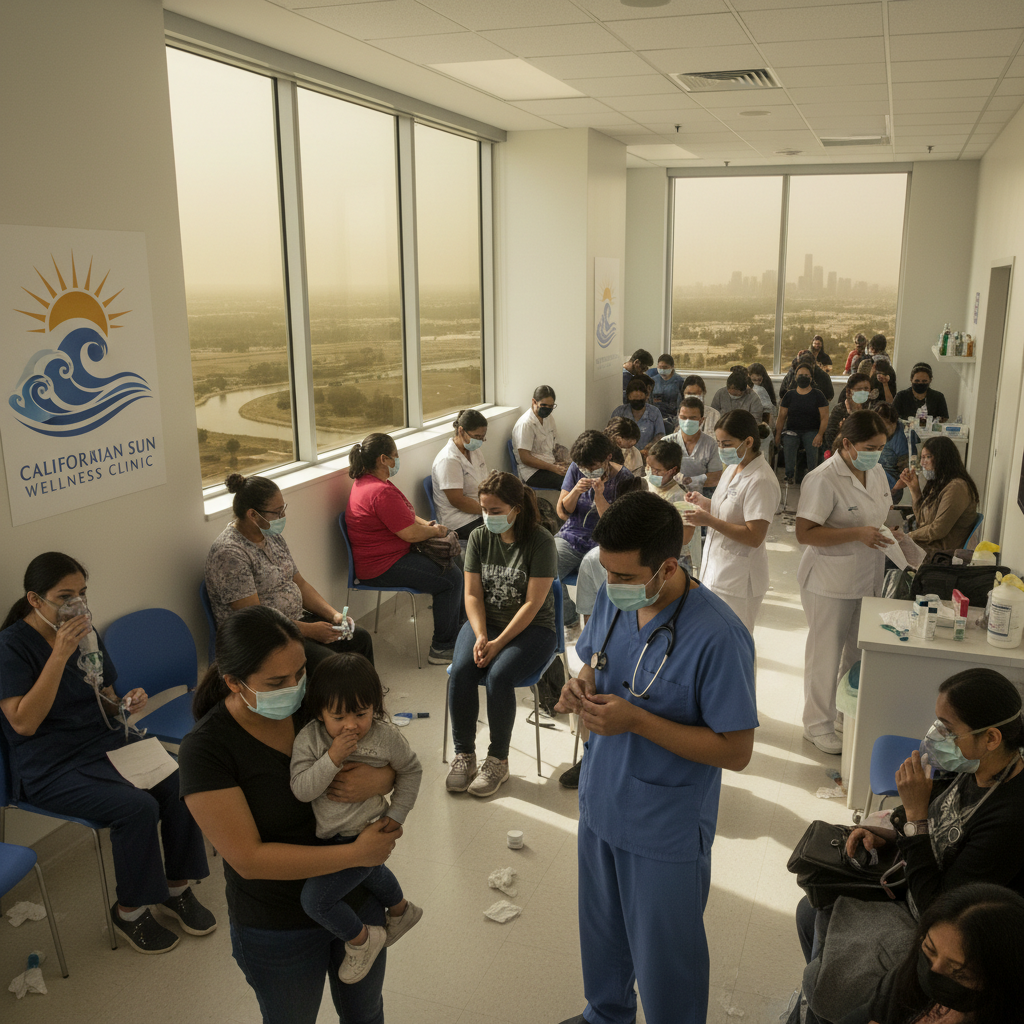
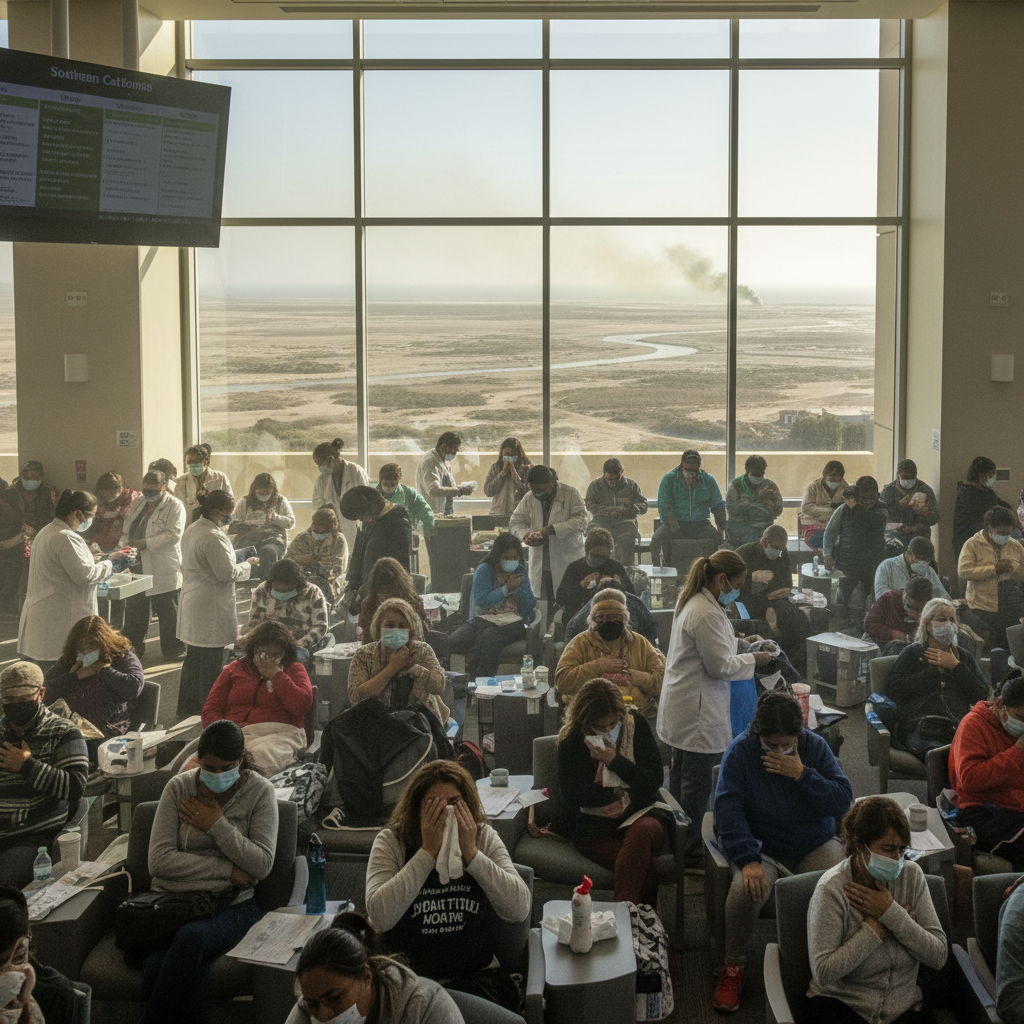
The invisible threat is making tens of thousands of people physically ill. The primary culprit is hydrogen sulfide, a toxic gas produced by the decomposing sewage. According to the Centers for Disease Control and Prevention, exposure to this gas can cause a range of symptoms, including headaches, nausea, eye and skin irritation, coughing, and shortness of breath. In severe cases, it can lead to tremors, delirium, and even death, with long-term health consequences that are only now beginning to be understood.
A 2024 survey conducted by San Diego County and the CDC revealed the shocking extent of the problem. Of the roughly 40,000 households near the river, 71 per cent of respondents could smell the sewage inside their homes, and 69 per cent reported that a household member had fallen ill from the exposure. The air quality has become so poor that the river’s foam is now visible from space.
In September 2024, a research team led by Kimberly Prather, a chemistry professor at the University of California, San Diego, installed air monitors in Egger’s neighbourhood. The results were stunning. They found that hydrogen sulfide concentrations peaked at night, reaching levels 4,500 times higher than typical urban air and 150 times higher than California’s own air standard. "They’d been being more or less gaslit and told, ‘There’s gas. It’s a nuisance. It smells, but it’s not bad,’" Prather says of the residents. Her team has also detected thousands of other odourless gases, many of which she says "are more toxic."
Local medical clinics have witnessed the health crisis firsthand. Dr. Matthew Dickson and Dr. Kimberly Dickson, who run a practice about a mile from a sewage discharge area known as the "Saturn hot spot," have seen a surge in patients with migraines, wheezing, nausea, and brain fog. "They'd say, ‘You know, I feel better when it doesn’t smell outside,’" says Dr. Kimberly Dickson. After a tropical storm in August 2023 caused the river to overflow, the doctors say their caseloads tripled. An analysis of their electronic health records confirmed a 130 per cent increase in patients treated for respiratory issues during periods of high river flow.
A long road ahead
The crisis disproportionately affects a largely Latino and lower-income population, a fact thrown into sharp relief when compared to other environmental emergencies. A January rupture that spilled 244 million gallons of sewage into the Potomac River, affecting affluent communities, prompted federal intervention within weeks. In contrast, the Tijuana River problem has persisted for decades.
Finally, there is movement. The United States and Mexico signed an agreement last year to address the pollution, with plans to upgrade wastewater treatment facilities. During a visit to San Diego in February, Environmental Protection Agency Administrator Lee Zeldin stated it would take about two years to resolve the crisis. In the meantime, Similar issues have surfaced in the Southwest, where San Diego will sell surplus water to Arizona and Nevada. The EPA is working with local officials on mitigation efforts, and San Diego County has distributed over 10,000 air filters to homes.
Frustrated residents have launched a "Stop the Stink" campaign through the Citizens for Coastal Conservancy to demand faster action. At the state level, Democratic Sen. Steve Padilla, who represents the area, has authored a bill to update California's 56-year-old safety standard for hydrogen sulfide to reflect its proven health risks. “I think when you look back when the standard was first established. it was all about nuisance. basically it was all about odor,” Padilla says. "I don’t think we had the understanding scientifically of what the health impacts were here, and now we do.” Even if the bill passes, a new standard would likely not be in place until 2030.
While the region waits for a permanent solution, the problem is a daily reality for many, impacting not just health but the simple joys of life, such as enjoying a meal outdoors, a popular activity in other parts of Southern California like Los Angeles. The issue highlights a stark contrast in the quality of life within the same state, with some residents enjoying thriving outdoor scenes while others are confined indoors by toxic air. It serves as a grim parallel to other long-term environmental challenges, such as the preservation of historical sites like the La Brea Tar Pits, which also require significant, sustained investment.
This is home
For Steve Egger, the fight is deeply personal. Doctors have advised him to move, but his family's history is rooted in this land. Three generations of his family raised dairy cows on what was once the Egger Dairy. He remembers swimming in the river as a boy, when it only flowed during the rainy season. Today, it flows year-round, carrying waste from factories, many owned by U.S. companies.
This is where I've lived all my life, with my family, my parents, my grandparents. This is home.
Egger believes a partial solution would be to restore the river to its historical route, which runs closer to the border and farther away from the dense residential areas and schools that are now plagued by the toxic air. He argues this would prevent the water from ponding and creating the hydrogen sulfide hot spots that torment his community.
Until a comprehensive solution is implemented, the health of thousands of Californians remains at risk. As Dr. Matthew Dickson warns, "Every day that this isn't fixed, more people are getting sick."