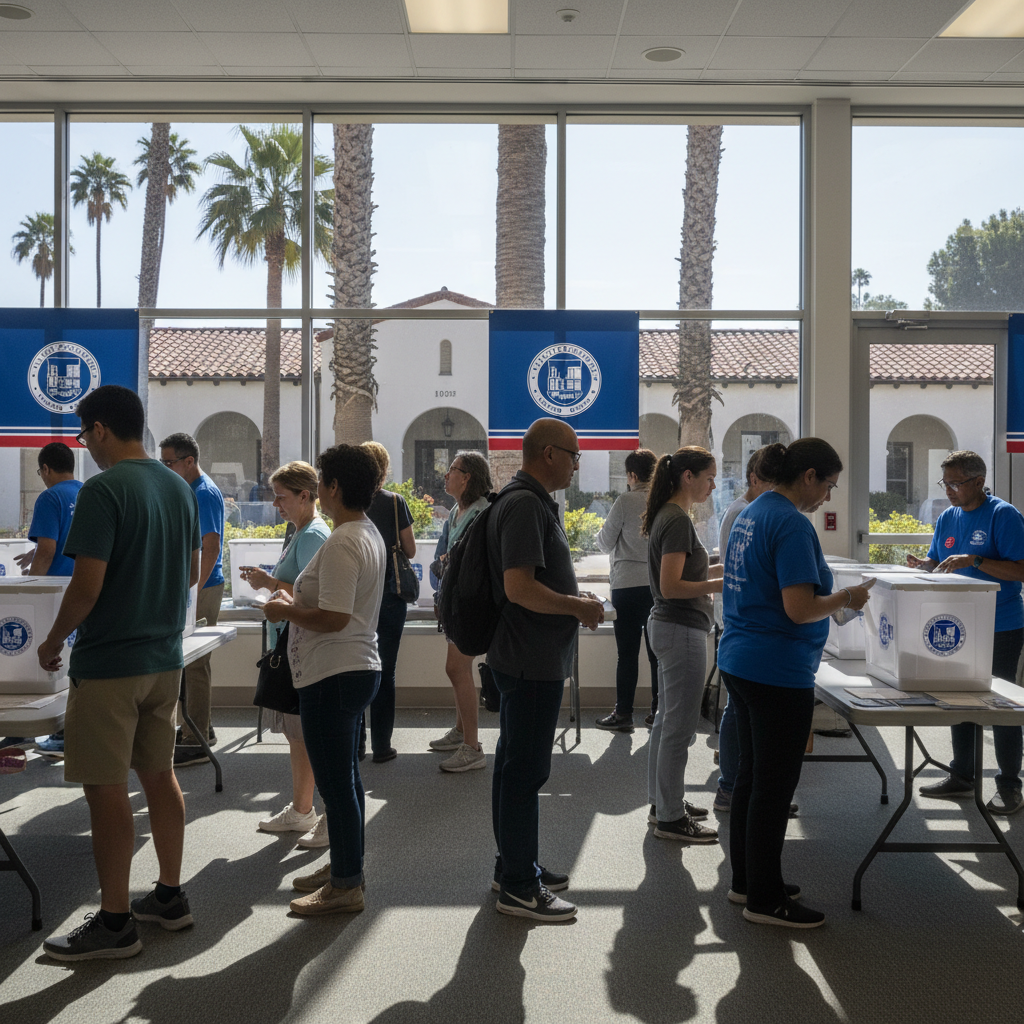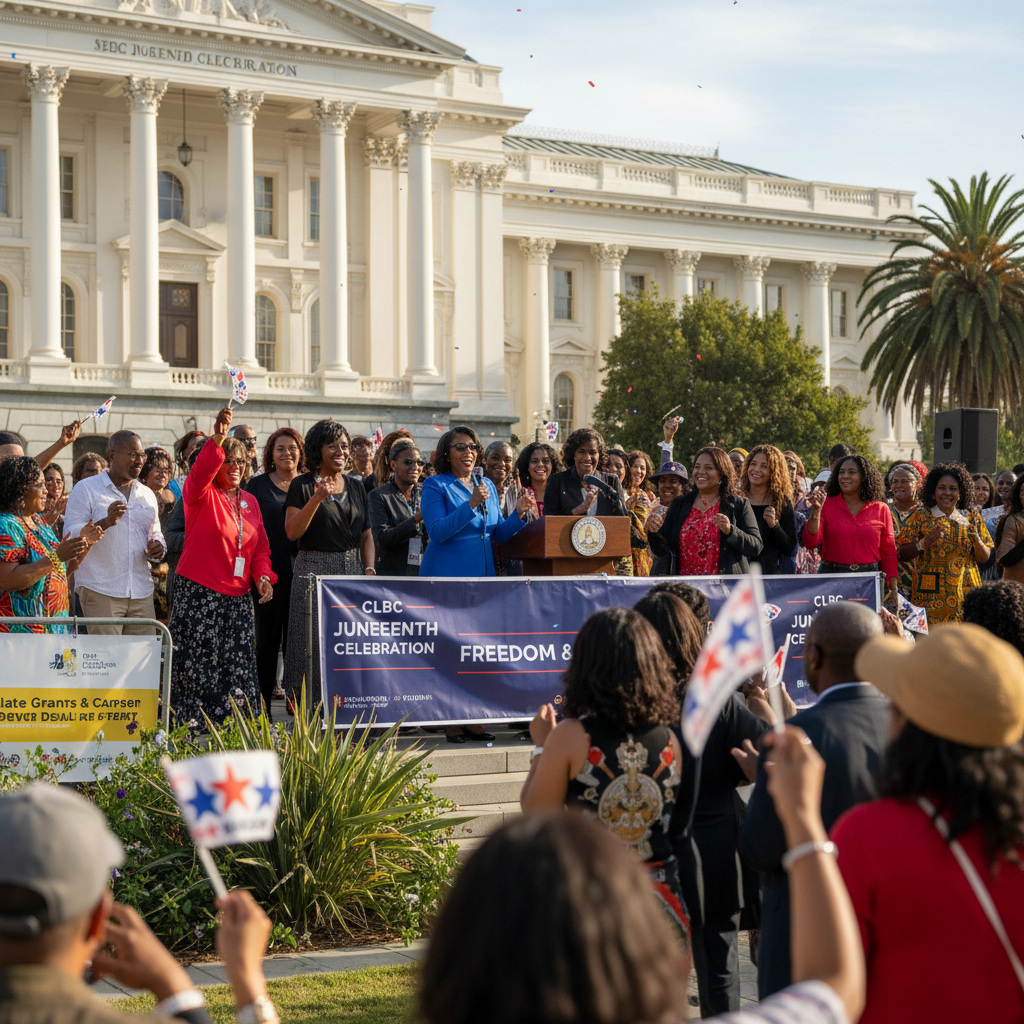
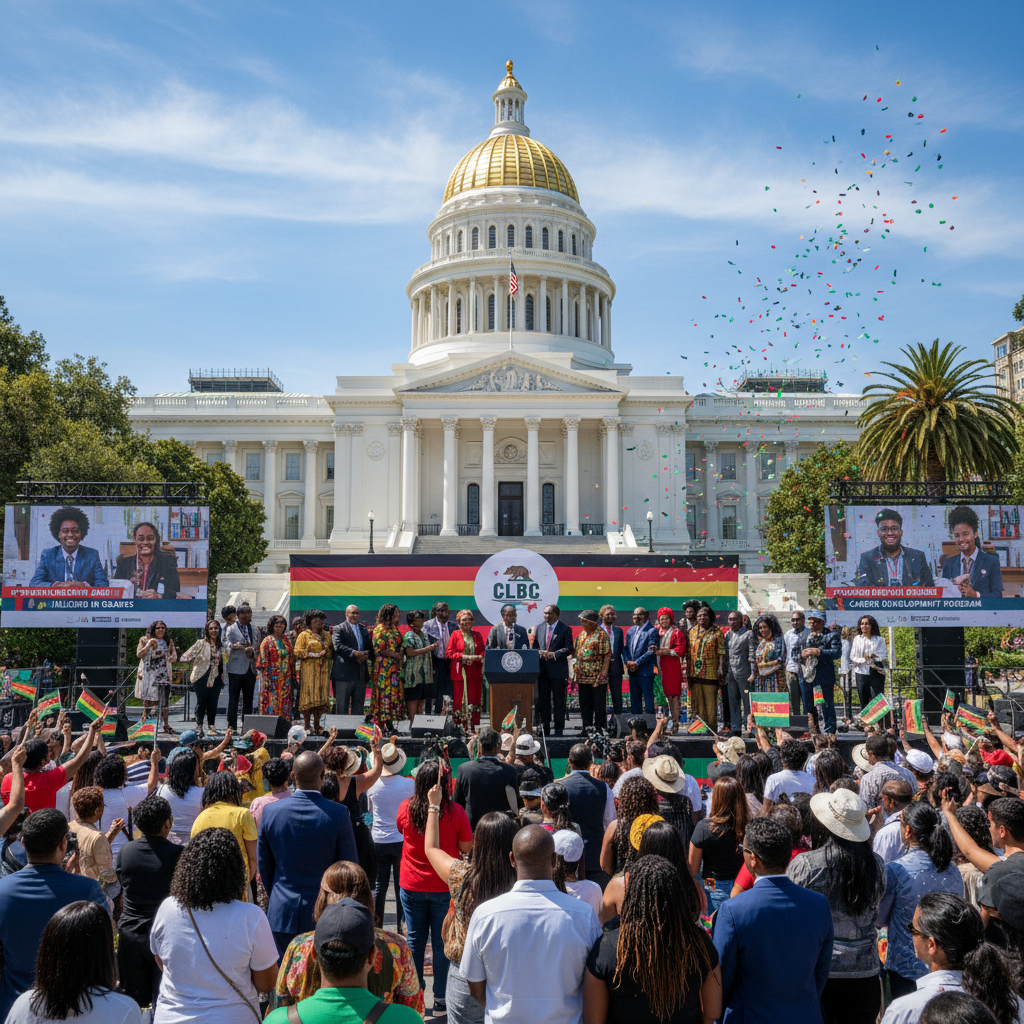
Hundreds gathered on the West Steps of the State Capitol on June 17 for a Juneteenth Freedom Day Celebration hosted by the California Legislative Black Caucus (CLBC). The free public event, held to kick off the holiday weekend, centred on a theme of reflection, community, and African American heritage, featuring live music and impassioned speeches from lawmakers.
The celebration marked the emancipation of enslaved African Americans in the United States and honoured the continued struggle for equality. Alongside legislators and community members, the event aimed to create a space for joy and remembrance.
The festivities included performances from Oakland-born neo-soul singer Goapele, Sacramento music producer and “NPR Tiny Desk” winner The Philharmonik, and the Grant Union High School Drumline. Following the public concert, the focus shifted inside the Capitol, where CLBC members formally called on their legislative colleagues to pass Senate Concurrent Resolution 183 to officially recognize Juneteenth in the state. The day highlighted the cultural and historical significance of the holiday, which has seen growing recognition across the country, with community-led events like block parties and art walks in Sacramento</a> becoming annual traditions.
Black Freedom Fund awards $4.6 million to advance community initiatives
In a significant boost for community-led initiatives, the Black Freedom Fund (BFF) announced it has awarded $4.6 million in grants to 119 organizations across California. The funding, part of its 2026 grantmaking cycle, is directed toward non-profits focused on critical areas such as housing justice, immigration advocacy, and economic equity.
The announcement comes at a crucial time, as BFF notes that philanthropic support for racial justice initiatives has been declining nationwide. Many community-based organizations are confronting financial instability despite a growing demand for their services. This year’s grant cycle is the largest in the foundation’s history and represents a strategic effort to broaden its reach, with 24% of the grantees being first-time recipients of BFF funding.
The organization reported a 59% increase in funding for groups in historically under-resourced regions, including Northern California, the Central Coast, the Inland Empire, and the San Joaquin Valley. Support for organizations working on immigration justice saw a 140% increase, while funding for housing and homelessness advocacy grew by 89%.
Since its inception in 2020, BFF has awarded more than $52 million to over 250 organizations statewide. The latest grants aim to strengthen groups that are deeply rooted in their communities, providing resources to address both immediate needs and long-term systemic challenges, including civic engagement, worker rights, and criminal legal reform.
State pilots 'Career Passport' to boost skills-based hiring
California has launched a pilot program for its new Career Passport, a digital tool designed to help workers connect with employers by emphasizing skills and experience over traditional college degrees. The initiative is part of a broader state effort to promote skills-based hiring and open doors to in-demand jobs for more residents.
The pilot phase, which began June 17 and runs through August 24, involves four vendors competing to build the final platform. The Career Passport will function as a Learning and Employment Record, allowing users to securely share verified records of their education, military service, work history, and other credentials. This program aligns with the state's goals to meet evolving workforce needs, such as the growing demand for specialized skills in fields like artificial intelligence, which colleges are working to address by expanding relevant programs</a>.
We’re working to connect qualified Californians to employment opportunities they may have otherwise been overlooked for. California’s Career Passport will be a win-win for our workforce, ensuring that relevant skills, credentials and real-world experience are recognized, and that capable workers are not being filtered out simply because they lack a four-year degree.
The program is a key component of Governor Gavin Newsom’s Master Plan for Career Education and is being developed with the California Community Colleges system. State officials hope the tool will give employers a more comprehensive view of an applicant's qualifications. Labour and Workforce Development Agency Secretary Stewart Knox said the passport will help build bridges between education and employment.
Voters to decide on auto insurance payout limits in November
Californians will decide the fate of a proposed constitutional amendment that aims to limit compensation and lawyer fees in automobile accident cases. Secretary of State Shirley N. Weber announced that the measure officially qualified for the November 2026 general election ballot on June 17 after proponents gathered the required number of valid signatures. While this measure targets consumer costs related to vehicles, the state is also pursuing other automotive policies like a new rule for energy-efficient tires.
If passed by voters, the initiative would cap contingency fees for attorneys representing accident victims, mandating that clients retain at least 75% of any monetary recovery. This restriction would not apply to lawyers representing defendants. The proposal would also increase the burden of proof for certain medical expenses and prohibit specific financial arrangements between attorneys and medical providers. The measure comes as federal lawmakers are also considering legislation that could impact consumer costs in other areas, such as a bill affecting TV prices for sports fans.
To qualify, the initiative needed 874,641 valid signatures. According to the Secretary of State’s Office, it successfully passed the threshold through a random sampling process. A fiscal analysis from the Legislative Analyst’s Office and the Department of Finance suggests the proposal could save California’s trial courts millions to tens of millions of dollars annually.
The measure is expected to be formally certified on June 25 unless its proponents withdraw it before that deadline, setting the stage for a significant policy debate ahead of the Nov. 3, 2026, election.