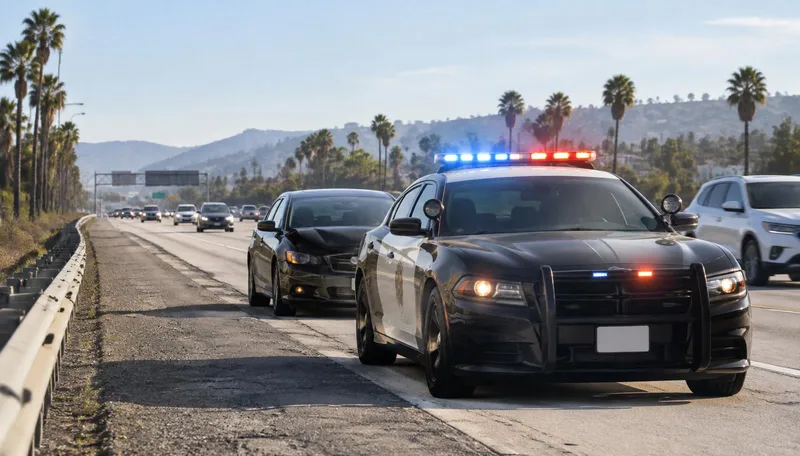
California runs on its freeways. From the 405 in Los Angeles to Interstate 5 and the 101, millions of people drive at highway speed every day. With that much traffic, crashes are a fact of life. Knowing what to do in the minutes, days, and weeks after a freeway collision can protect your health, your finances, and your ability to recover what you are owed.
This guide walks through the practical steps, the legal rules that apply in California, and the mistakes that most often weaken a claim.
Safety First in the Minutes After a Crash
A freeway is one of the most dangerous places to be outside a vehicle. If your car can still move and nobody is seriously hurt, California law encourages drivers to pull over to the right shoulder or take the next exit rather than stopping in a live lane. Turn on your hazard lights and call 911 if anyone is injured or lanes are blocked.
On state highways and freeways, the agency that usually responds is the California Highway Patrol, not the local police department. CHP officers document the scene, take statements, and prepare a collision report. Ask the officer for the report number before you leave, because you will need it when you deal with insurance companies later.
While you wait, exchange information with the other driver. That means names, phone numbers, driver’s license numbers, insurance companies and policy numbers, and license plates. If you can do so safely, take photos of all vehicles, the road conditions, skid marks, debris, and any visible injuries. Get witness contact details early.
Reporting Rules and Deadlines in California
Calling the police is only one part of reporting. California requires drivers to file an SR-1 report with the California Department of Motor Vehicles within 10 days if anyone was injured or killed, or if property damage was more than $1,000. This duty applies no matter who caused the crash, and it is separate from any report the CHP files. Failing to submit it can lead to a suspended license.
You should also notify your own insurance company promptly. Most policies require timely notice. Stick to the facts when you speak with any adjuster. Describe what happened without guessing about speeds or distances, and do not say the crash was your fault, even as a polite reflex.
The deadline that matters most for an injury claim is the statute of limitations. In California, most personal injury lawsuits must be filed within two years of the date of the crash. Claims involving a government entity, such as a crash caused by a dangerous road condition or a public vehicle, have a much shorter window. In those cases, a formal government claim usually has to be filed within six months. Missing either deadline can end a case before it starts. Experienced firms such as Sweet James California accident attorneys track these deadlines closely for their clients, which is one less thing for an injured driver to worry about while recovering.
How Fault Works on California Freeways
California follows a pure comparative negligence system. In plain terms, each driver’s share of blame is measured as a percentage, and any compensation is reduced by the injured person’s share. If a jury decides your total damages are $100,000 but that you were 20 percent responsible because you were going slightly over the speed limit, you can still recover $80,000.
Freeway crashes often involve more than two vehicles, which makes fault harder to sort out. A chain reaction on the 10 or the 710 might start with one driver following too closely, but other drivers may have contributed by changing lanes suddenly or braking without reason. Commercial trucks add another layer, because the trucking company, the cargo loader, or a maintenance contractor could share responsibility.
This is where people often benefit from experienced help. A legal team can collect dashcam footage, CHP reports, and expert reconstructions to establish who did what. Insurance companies have their own investigators from day one, and injured drivers who try to handle a complex claim alone are often at a disadvantage.
Medical Care, Documentation, and Common Mistakes
Many injuries from freeway crashes do not show up right away. Adrenaline can hide pain for hours, and conditions like whiplash, concussions, and soft tissue damage may only become obvious the next day. See a doctor as soon as possible, even if you feel fine. A prompt medical visit protects your health and also creates a record linking your injuries to the crash.
Keep a simple file with everything related to the collision. Useful items include:
- The CHP report number and the officer’s name
- Photos and videos from the scene
- Medical bills, prescriptions, and appointment notes
- Records of missed work and lost wages
- Repair estimates and rental car receipts
Several mistakes come up again and again. One is accepting the first settlement offer before the full extent of an injury is known. Another is giving a recorded statement to the other driver’s insurer without preparation. A third is posting about the crash on social media, where a photo from a weekend outing can be used to argue that an injury is not serious.
California drivers also need to understand their own coverage. The state minimum liability limits are low compared with the cost of a serious injury, so many crash victims end up relying on their own uninsured or underinsured motorist coverage. Reviewing your policy before you need it is one of the simplest ways to protect yourself.
A freeway collision can turn ordinary life upside down in a matter of seconds. Getting safely off the road, reporting the crash properly, seeing a doctor, and keeping good records will put you in the strongest position to recover. Paying attention to California’s deadlines and fault rules matters just as much. With the right information and support, drivers can focus on healing while their claim is handled properly.