
More than two decades after state legislators first directed the California Energy Commission to improve tire efficiency, the agency is now advancing a landmark proposal that could save drivers money at the pump and significantly reduce vehicle emissions. The rule would require all replacement tires sold in the state to meet the same energy-efficiency standards as those on new cars by 2031.
California would be the first state in the nation to enact such a regulation. The proposal targets a vehicle component often overlooked by consumers but one that plays a crucial role in fuel consumption. Tires on new vehicles are designed with low "rolling resistance," which minimizes the friction and drag on the engine. This efficiency directly contributes to a car's overall miles per gallon, a key factor in both consumer costs and environmental impact.
The move comes as California continues to chart its own course on environmental policy, often in opposition to federal trends. The initiative is seen by supporters as a way for the state to maintain its leadership in combating climate change, particularly as the previous presidential administration sought to weaken national fuel economy standards and challenged California's authority to set its own stringent greenhouse gas emission rules for automobiles.
A tool to 'cut costs and clean up the air'
The commission's own analysis projects substantial benefits for both consumers and the environment. Once the rule is fully implemented, the average driver is expected to save approximately $153 over the life of a set of tires. This calculation already accounts for the slightly higher upfront cost of the more efficient tires, which is estimated to be around $26 per set.
On a larger scale, the aggregate impact on the state's fuel consumption would be significant. By 2035, the commission estimates the rule would slash California's annual gasoline demand by an amount equivalent to one to two months of production from a single California refinery. In terms of carbon dioxide emissions, the reduction would be comparable to taking 400,000 gasoline-powered cars off the state's roads each year. This would be a meaningful step toward meeting California's ambitious climate goals and improving air quality in a state with some of the nation's most polluted cities.
Mixed reactions from industry and public
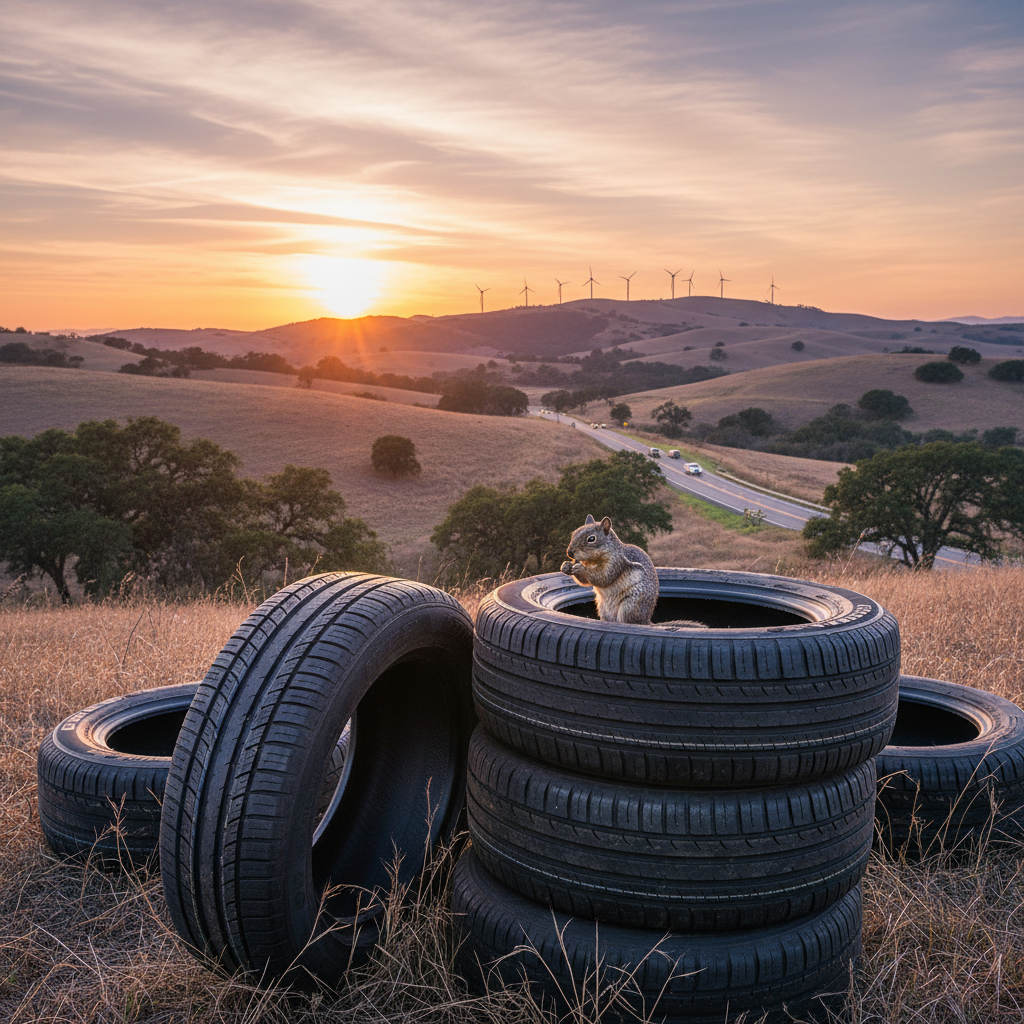
During a public hearing on the proposal, many drivers and environmental advocates voiced strong support. Consumer advocacy groups, including Consumer Reports and the Consumer Federation of America, endorsed the rule, describing the commission's cost analysis as “well-grounded.” They framed the regulation as a “much needed response to the affordability crisis” facing many Californians who are burdened by high transportation costs.
Major industry players such as Michelin, Discount Tire, and Enso, a company specializing in tires for electric vehicles, have also aligned in favour of the proposal. However, the tire industry is not united. Opponents, including Goodyear, Yokohama, and the California Tire Dealers Association, have pushed back, arguing that the true cost of producing these higher-efficiency tires will exceed the commission's estimates, potentially placing a larger financial burden on consumers than anticipated.
Some members of the public raised concerns about the potential trade-offs of low rolling resistance tires, questioning their safety and durability. In response to this feedback, the commission has already integrated new grip standards into the proposed rule to ensure safety is not compromised. Furthermore, an agency study found no evidence that more efficient tires have a shorter lifespan. The proposal also includes relaxed efficiency requirements for certain categories of long-lasting tires to address durability concerns.
Impact on California's diverse car culture
The proposal has also drawn criticism from California's vibrant community of car enthusiasts. These drivers often prefer specialized, high-performance tires for activities like track racing or for aesthetic reasons, which may not meet the proposed efficiency standards.
As part of California car culture, enthusiasts who take vehicles to the track and enjoy a variety of higher-grip, lower-treadwear options would be disproportionately impacted. Despite the vocal opposition from some quarters, officials stress that the transition will be gradual and may not be as disruptive as critics fear. Many popular replacement tires already for sale in the state meet the proposed 2031 standards. Los Angeles officials and others in large urban centres are watching the proposal as part of a wider effort to reduce regional air pollution, similar to how Los Angeles voters are deciding on key local leaders in the June 2 primary.
Ken Rider, a staffer with the Energy Commission, noted that because these tires are already common, most drivers will not notice a significant change. “There is a significant number of popular replacement tires that already meet [the requirements] that are safe, long-lasting, and competitively priced,” Rider said. “They are made across a variety of manufacturers, across a variety of vehicle shapes and sizes.”
Commission staff are currently reviewing the public feedback and may introduce further revisions to the proposal. If significant changes are made, another round of public comment could be initiated. Once the language is finalized, the proposal must be brought before the commission for a final vote before it can become law.