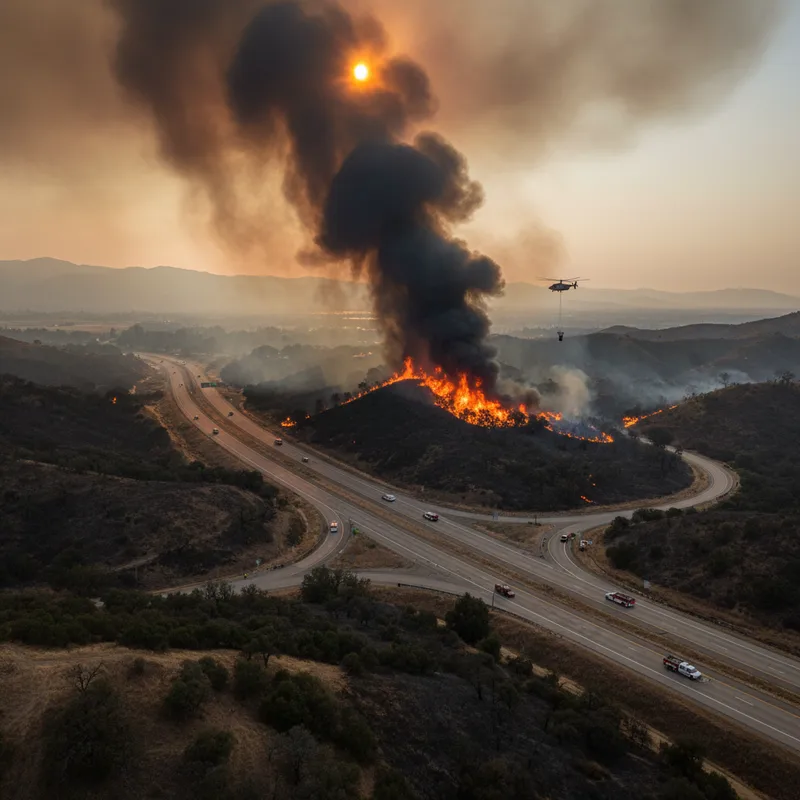
A wildfire ignited late Wednesday evening in Kern County, burning 520 acres on both sides of Interstate 5 near Lost Hills. The blaze, named the Lost Fire, was first reported at 8:05 p.m. north of Highway 46, according to the Kern County Fire Department and Cal Fire.
As of Thursday morning, approximately 12 hours after it began, there were no details on the fire's containment. The incident adds to a growing list of wildfires that continue to challenge the state, highlighting an escalating crisis that has seen fire seasons become longer and more destructive.
This latest fire emerges in the context of a long-term trend of increasing wildfire activity in California. An analysis of state data shows that 15 of the 20 largest wildfires in California's recorded history have occurred since the year 2000, with ten of the most destructive fires happening since 2015. Most of these fires were caused by human activity, raising serious questions about prevention and land management policies. In other regions, businesses are being urged to prepare for climate change.
The rising wildfire threat in a changing climate
The increasing frequency and intensity of wildfires is not a coincidence. Researchers have established a clear link between human-induced climate change and the weather conditions that fuel these disasters. A report from World Weather Attribution noted that climate change is making hot, dry, and windy weather more common, directly increasing the risk of fires starting and spreading rapidly. Southern California's Mediterranean climate, with its fire-adapted shrublands and grasses, is naturally prone to fire, but the baseline conditions are becoming more extreme.
The devastating wildfires in Los Angeles in January 2025, which claimed 28 lives and destroyed over 16,000 structures, serve as a stark example. Those fires were exacerbated by exceptionally strong Santa Ana winds, which occur when high-pressure systems over the Great Basin push dry air toward the coast. While these winds are a seasonal phenomenon, they coincided with a severe drought. The region had not seen significant rainfall since May of the previous year, leaving vegetation dangerously dry and flammable.
Furthermore, above-average rainfall in the preceding winters of 2022 and 2023 spurred significant vegetation growth. This abundance of plant life subsequently died off in the drought, creating a massive fuel load for the fires. Scientists use the Fire Weather Index (FWI) to quantify this risk, combining temperature, humidity, wind speed, and recent precipitation. During the 2025 fires, the FWI around Los Angeles reached exceptionally high levels, signalling the severe conditions.
The delicate science of fire ecology
While large, destructive wildfires pose a significant threat to lives and property, fire itself is a natural and essential part of most California ecosystems. According to the California Department of Fish and Wildlife (CDFW), a majority of the state's diverse ecosystems are either fire-dependent, meaning they need fire to maintain their health, or fire-adapted, meaning they have evolved to withstand it. Fire can act as a catalyst for biodiversity by clearing organic debris, releasing nutrients into the soil, and triggering growth in certain plant communities.
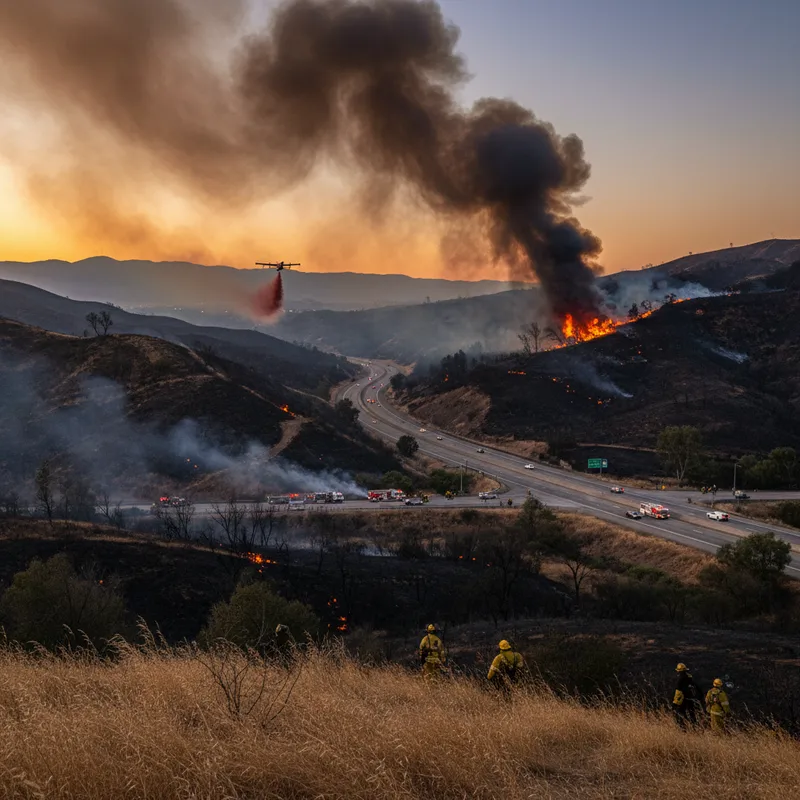
The challenge facing the state is the shift from these natural fire cycles to what the CDFW describes as 'atypically large patches of high-severity fire.' These megafires can hinder an ecosystem's ability to recover. Instead of promoting native biodiversity, they can lead to the long-term or even permanent loss of native vegetation. This destruction of habitat creates opportunities for non-native, invasive species to expand, fundamentally altering the landscape and its ability to support native wildlife.
As the state's primary wildlife agency, the CDFW is tasked with managing California's natural resources while ensuring public safety. This includes working with partners to build landscape resilience in an era of extreme wildfires. The department manages over 1.1 million acres of land and plays a key role in reviewing environmental projects and funding habitat restoration efforts, all of which are increasingly viewed through the lens of fire risk.
Managing the flames with fire
In response to the growing threat, researchers and land managers are increasingly turning to proactive strategies that work with fire's natural role in the environment. A landmark 20-year study by UC Berkeley at the Blodgett Forest Research Station has provided strong evidence for the effectiveness of a 'good fire' approach. The research confirmed that prescribed burning and mechanical thinning can significantly reduce the risk of catastrophic wildfires and improve a forest's resilience to drought and climate change.
The study involves treating different plots of forest with various combinations of fire and thinning, then comparing them to untreated control plots. The results are visually and scientifically striking. Forest areas treated with prescribed burns are more open, with less ground debris and fewer small trees that can act as "ladder fuels," allowing fire to climb into the main tree canopy. This managed approach to fire helps maintain a healthier, more stable forest structure that is less susceptible to out-of-control burns.
These findings support broader state-level initiatives, such as the Governor’s Forest Management Task Force. Established in 2018, the multi-agency task force works to improve forest health on a landscape scale, using the best available science to guide its efforts. The UC Berkeley study concluded that any combination of prescribed burning and thinning is far better for forest health than doing nothing at all. Integrating these practices is seen as a critical tool in adapting to California's fiery new reality.
The new normal for California
The Lost Fire in Kern County is another reminder of the state's year-round fire vulnerability. While an investigation into its cause is ongoing, its occurrence fits a well-established and concerning pattern of drier conditions and more readily available fuel. From the grasslands of Southern California to the vast forests of the Sierra Nevada, no part of the state is immune.
Addressing the problem requires a multi-faceted approach that goes beyond emergency response. It involves systemic changes in how communities are planned, how homes are built, and how landscapes are managed. It also requires grappling with the global issue of climate change, which is the underlying driver of the worsening conditions. The continued pollution from burning fossil fuels is directly contributing to the warmer temperatures and prolonged droughts plaguing the American West.
As firefighters work to gain control of the Lost Fire, the incident underscores the urgent need for sustained investment in proactive wildfire resilience measures. From scientific research and controlled burns to public education and community preparedness on issues from fire risk to environmental health, California is in a long-term battle to coexist with fire. As the science shows, inaction is no longer a viable option.